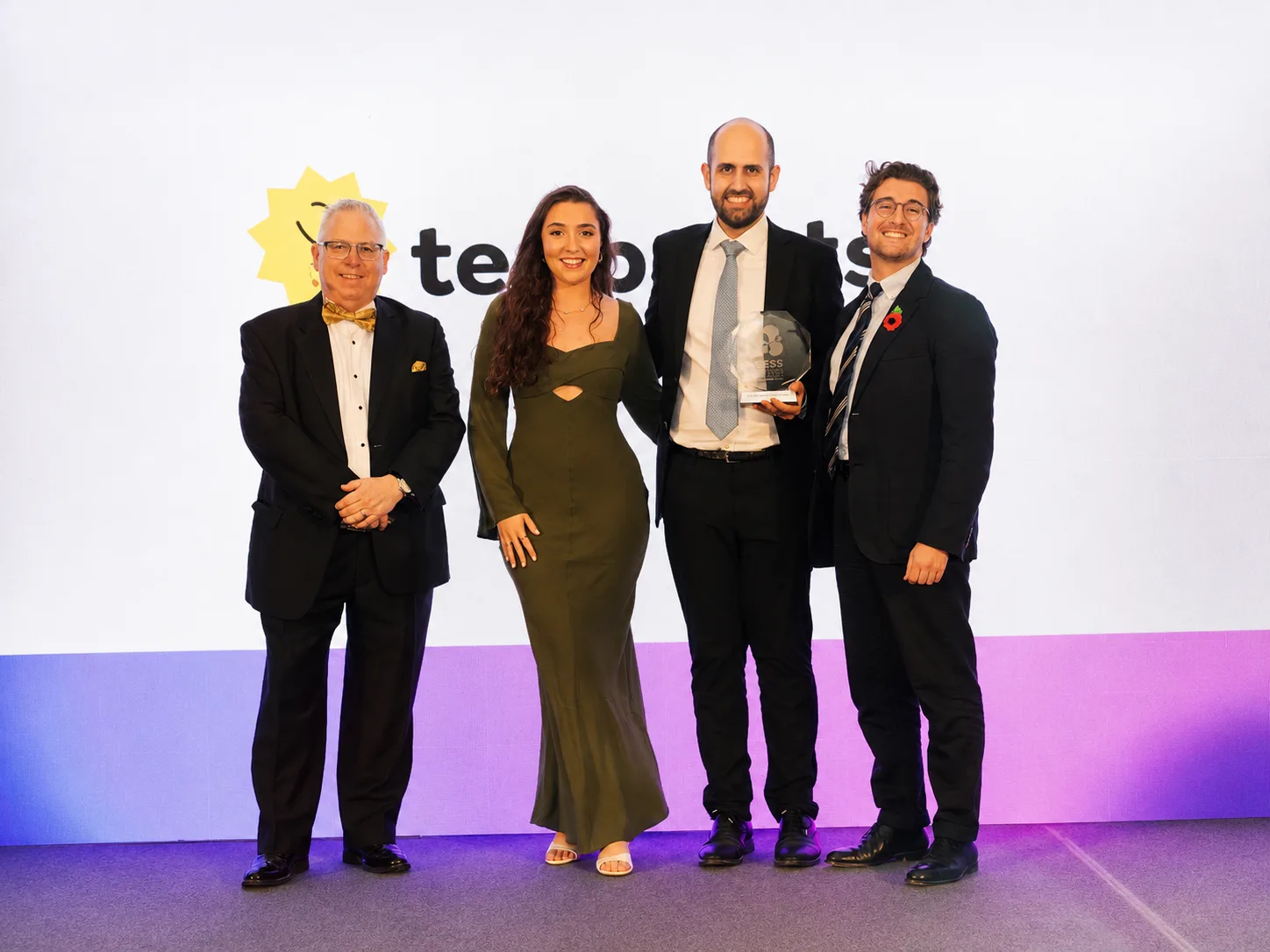
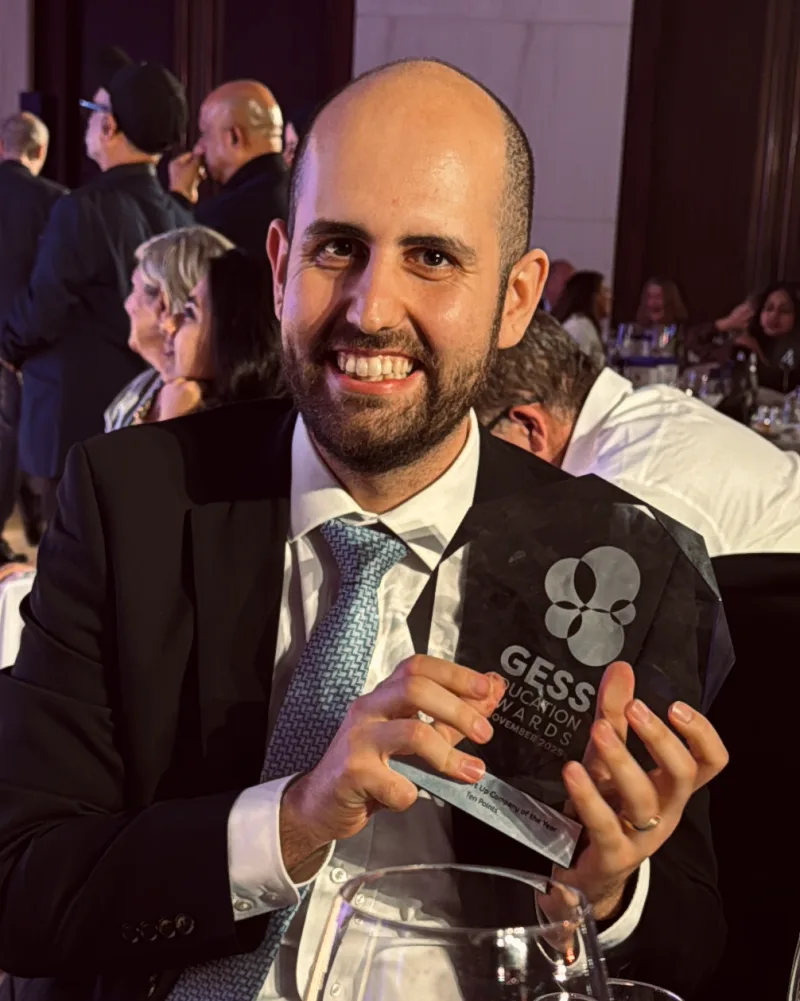
I’ll be honest: when our name was read out at the GESS Education Awards, my first feeling wasn’t triumph. It was something closer to relief, the kind you feel when a thing you believed in quietly, for a long time, is suddenly believed in out loud by a room full of people whose opinion you respect.
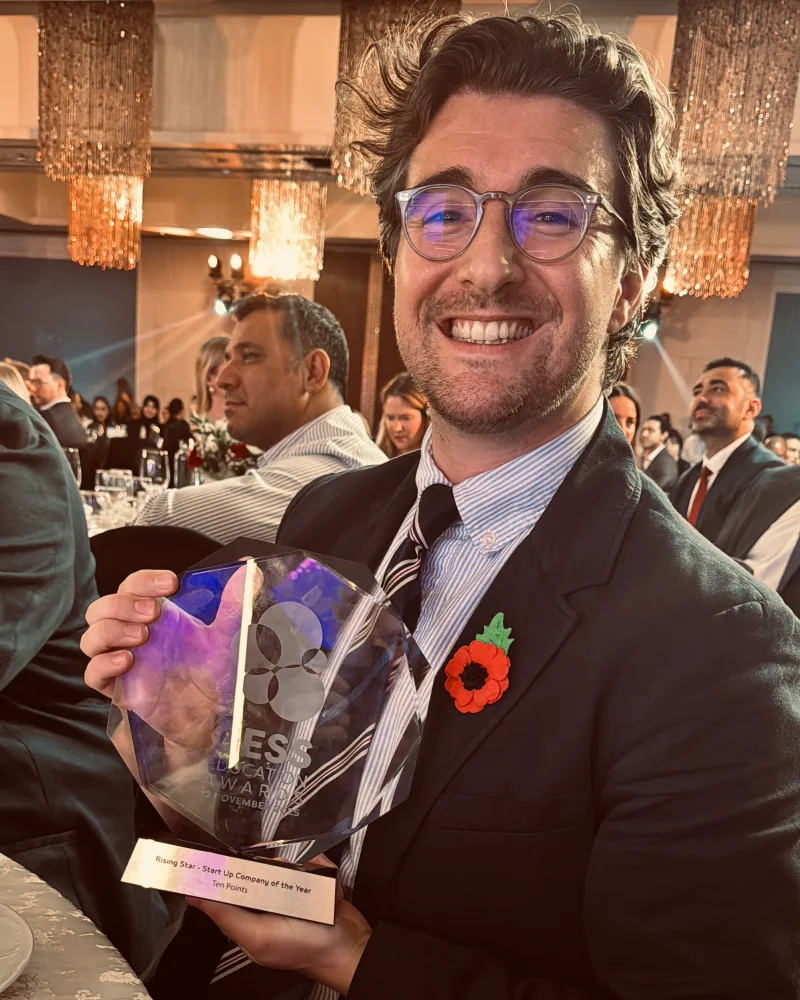
We won Rising Star: Start-Up Company of the Year. I want to use this post not to dwell on the trophy, but to say what the moment actually meant to us, and where it points.
Where this started
Ten Points wasn’t dreamed up in an office. It was built inside a working school, by educators who were frustrated by the same gap every day: the distance between the wellbeing conversations we kept having in meetings and the reality of what a classroom feels like at half past two on a wet Tuesday.
The thing that never sat right was how separated it all was. Behaviour lived in one system, wellbeing in another, and the people who needed to see them together – the teacher in the room, the leader trying to spot a pattern before it became a problem – were left stitching the picture together by hand, usually too late.
Behaviour is often the visible expression of how a child is feeling. Treat the two as separate problems and you’ll always be a step behind.
So we set out to join them up. Not to add another dashboard to an already crowded desk, but to make the connection between how a child behaves and how a child feels visible enough to act on early.
What the judges saw
If I had to name the thing that stood out, I think it was this: our starting point was culture, not compliance. We didn’t lead with sanctions or one-off wellbeing surveys. We started from the everyday – the small, ordinary interactions that actually build a school’s character – and treated behaviour as information, not just an outcome to be logged and punished.
The feedback that meant the most was that the platform felt grounded in real school life, that it supports what good teachers already do, rather than asking them to stop and feed a machine. That was the whole point. Anything that adds friction to a busy classroom will quietly die there, no matter how clever it is. Some of our hardest work went into making Ten Points feel simple.
The moments that mattered more
Here’s the part I most want to get across. The award is a milestone, and I’m proud of it. But our proudest moments have always been the quiet ones.
A teacher telling us they now catch a worrying pattern weeks earlier than they used to. A child explaining – in their own words – how stopping to name what they were feeling helped them choose differently. Those don’t come with a stage or a spotlight, and they’re worth more to me than any metric on a slide.
That’s the strange thing about an award like this: it points at the visible work, but what it’s really recognising is hundreds of invisible ones.
What I won’t pretend was easy
Two things were genuinely hard.
The first was resisting the urge to overcomplicate. Every instinct in software pulls you towards more: more features, more options, more settings. Schools don’t need more; they need clearer. We spent a long time taking things out.
The second was trust. Schools are rightly cautious about wellbeing data, and they should be. We took that seriously from the first line of code, building safeguarding, transparency, and respect for professional judgement into the platform rather than bolting them on afterwards. A tool that asks a school to trust it with something this sensitive has to earn that trust by design.
Who this really belongs to
This is the bit I most wanted to write down.
The award has our name on it, but it isn’t really ours. It belongs to the schools and educators who trusted us when we were small and unproven, who told us honestly when something didn’t work, and who let us build alongside them rather than at them. Ten Points is the product of that collaboration: teachers, leaders, and developers in the same room, solving a real problem together. If you were one of those early schools: thank you. This is yours.
What comes next
The win gives us the confidence to keep scaling, but carefully. Our focus for the year ahead is deepening insight, not piling on features for their own sake: richer analytics for leadership teams, stronger support for secondary settings, and a thoughtful expansion of our AI-supported wellbeing tools, always with safeguarding and human oversight at the centre. The goal there isn’t to replace a caring adult; it’s to prompt reflection and surface what a busy week might otherwise bury.
Everything we build still comes back to one question: does this help a school act earlier, and more effectively, for a child who needs it? If the answer is yes, we build it. If it isn’t, we don’t.
The Rising Star award says, generously, that we’re a school still rising. That feels about right. We’re grateful, we’re a little humbled, and – more than anything – we’re excited about how much is still in front of us.
Onwards.