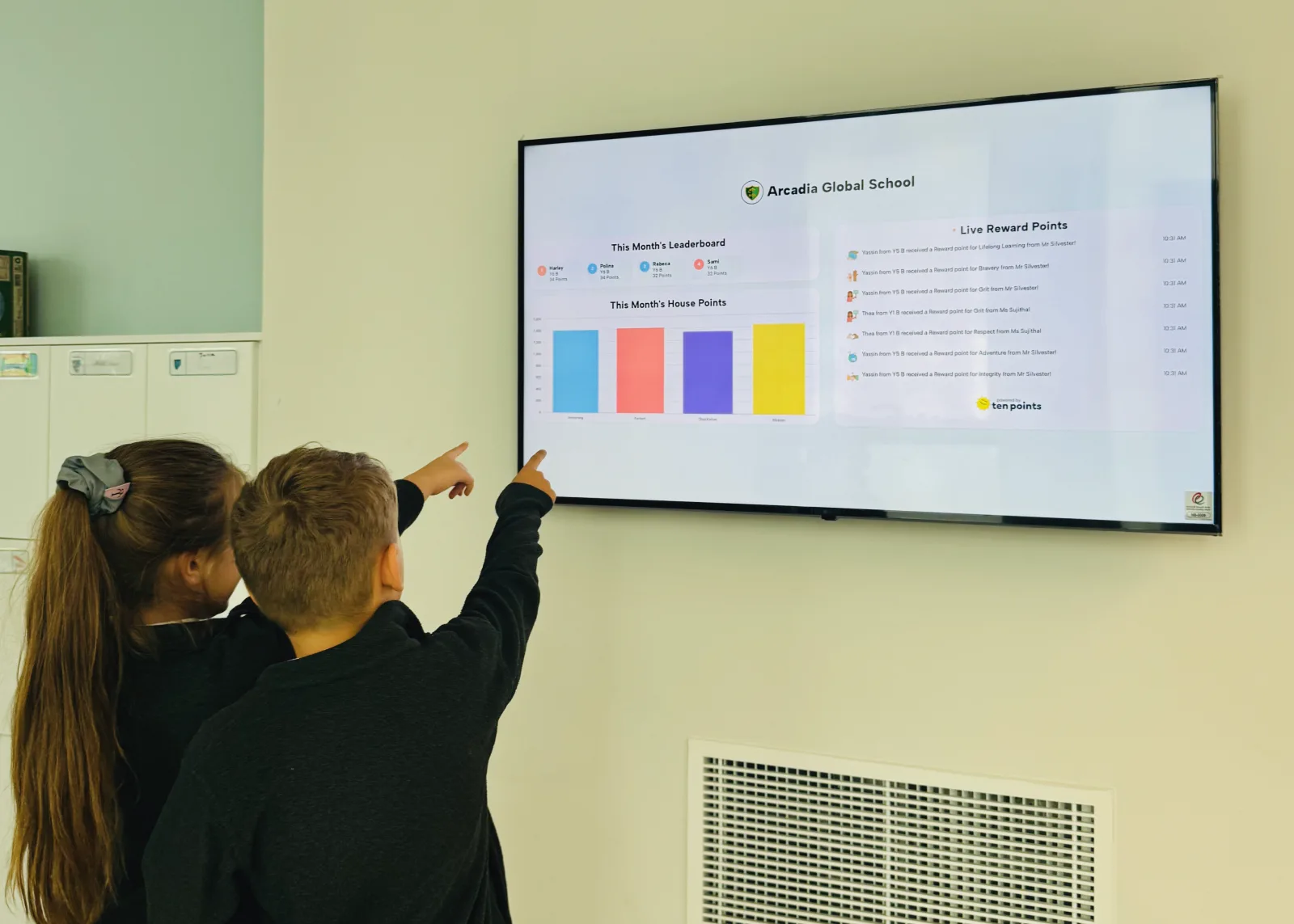
Walk down a corridor at Arcadia Global School and you’ll often find a small crowd gathered in front of one of the screens. Not watching a video. Watching each other. The house points are climbing, a name they recognise has just scrolled past on the live feed, and two children are pointing at the chart working out whether their house has nudged ahead since break. It’s a small scene, but it’s the whole idea: recognition that the entire community gets to share in, not just the child who earned it.
A young school, building its own identity
Arcadia Global School opened in Al Furjan in 2023, a brand-new British-curriculum school in Dubai, growing year group by year group. That’s a particular kind of challenge. An established school has decades of culture to lean on; a new one has to build its sense of who-we-are from scratch, deliberately, while the paint is barely dry.
AGS decided that culture would be organised around four houses, named after explorers and pioneers: Shackleton, Armstrong, Earhart and Watson. It’s an old idea, and a good one: a house gives a child a “we” to belong to from their very first day, a team that was winning before they arrived and will keep going after they leave. The question was how to make the houses mean something day to day, rather than being four words on a wall.
Points that belong to a house
This is where Ten Points came in. Every reward point a child earns at AGS – for effort, for kindness, for showing one of the school’s values – is also a point for their house. Recognition stayed personal, but it stopped being only personal.
A point for you is also a point for us. That small change is the difference between a sticker and a sense of belonging.
It’s a subtle shift with an outsized effect. A child who might shrug off praise for themselves will work for their house without a second thought. The quiet child who’d never chase the top of a leaderboard is suddenly contributing to a total that fifty classmates are willing higher. Linking points to houses turned individual moments of recognition into a running, collective story, one every child has a stake in.
Celebrating out loud
The houses needed somewhere to live, and that’s the live displays AGS mounted in their corridors. It’s the McGonagall “ten points to Gryffindor” instinct made real: points land in public, the house bars rise where everyone can see them, and a feed of real-time recognition scrolls past all day – this student, that value, that teacher.
What we didn’t fully anticipate was how much children would enjoy seeing other people celebrated. A name on the feed isn’t only a moment for the child who earned it; it’s a cue for everyone walking past to notice something good happened. Belonging stops being a private feeling and becomes a shared, visible culture, the thing you can point at in a corridor. The whole school gets to share in the wins, and a community that celebrates together starts to feel like one.
The same system, for how children feel
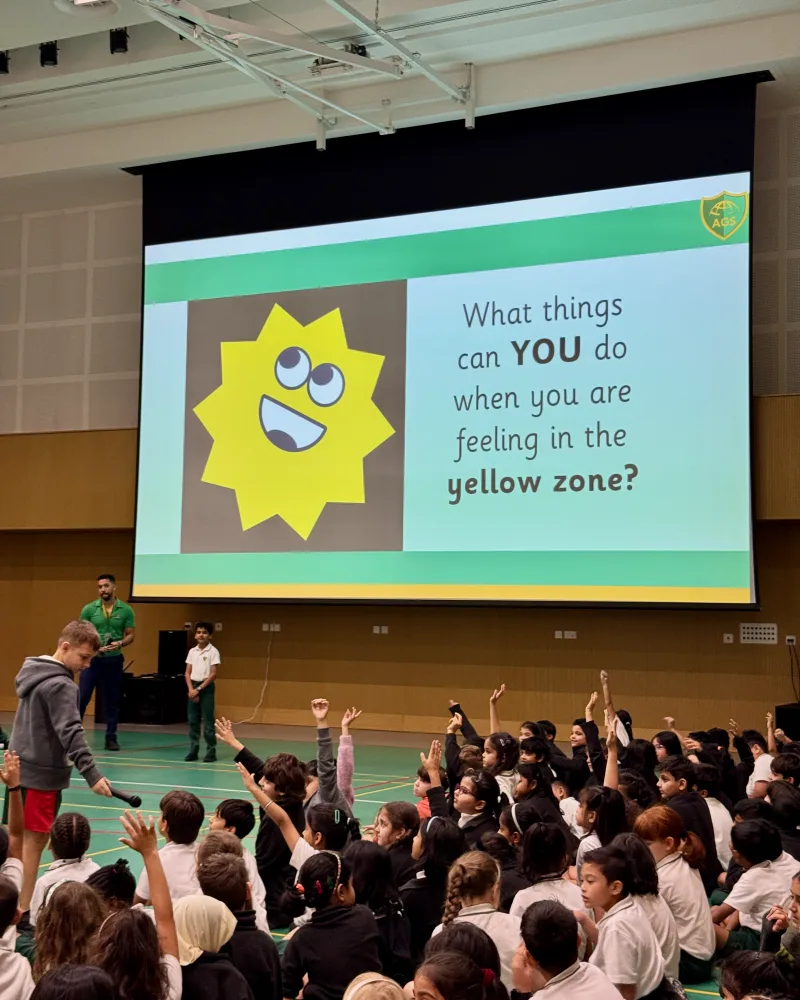
Houses and points are the visible half. The other half is quieter, and it’s the part we care about most: behaviour and wellbeing belong in the same conversation, not in separate systems.
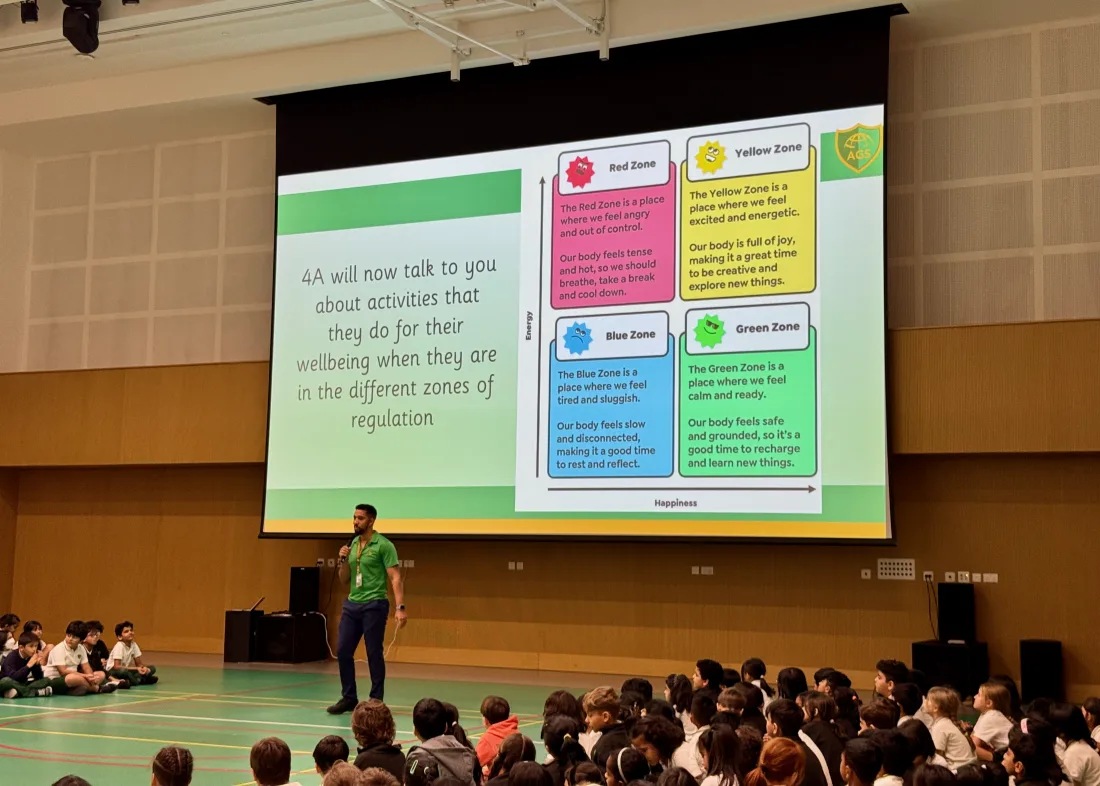
At AGS that shows up in the way they talk about feelings. In assemblies led by both teachers and students, children work through the mood meter – the red, yellow, blue and green of how we’re feeling – and, crucially, what to actually do in each one. Not “calm down”, but a real strategy a child can reach for when they land in the yellow or the blue. Watching a class of children put their hands up to share the thing that helps them is about as good as this job gets.
When the same children who earn house points are also building a shared language for how they feel, recognition and wellbeing stop pulling in different directions. They start reinforcing each other.
What the results showed
In its first ever KHDA inspection, Arcadia Global School was rated Good overall, and Good for wellbeing – the highest outcome a school can achieve at a first inspection in Dubai. For a school that opened its doors only a couple of years ago, that’s a remarkable start, and it belongs entirely to the staff and children who built it.
AGS was also named a School of Character by the Association for Character Education, a recognition of how seriously the school takes the business of growing good people, not just good results. We were proud that the data and evidence Ten Points gave the school – a clear, consistent picture of recognition and wellbeing across the community – formed part of that successful application.
We’re always careful here: a platform doesn’t earn an inspection rating or a character award. People do. What a tool can do is make the good work visible, consistent and easy to evidence, so the culture a school is building shows up clearly when someone comes to look.
Why this is the part we love
We built Ten Points because behaviour and wellbeing are two sides of the same child, and they deserve to be held together. Arcadia Global School is what that looks like when a community takes the idea and runs with it – houses that give every child a “we”, screens that let a whole school share in each other’s wins, and assemblies where children teach each other how to feel okay.
To everyone at AGS – staff, students, and the families behind them: thank you for letting us be a small part of it. Watching a community celebrate together never gets old.
Ten points to Watson. And to Shackleton, Armstrong and Earhart too.