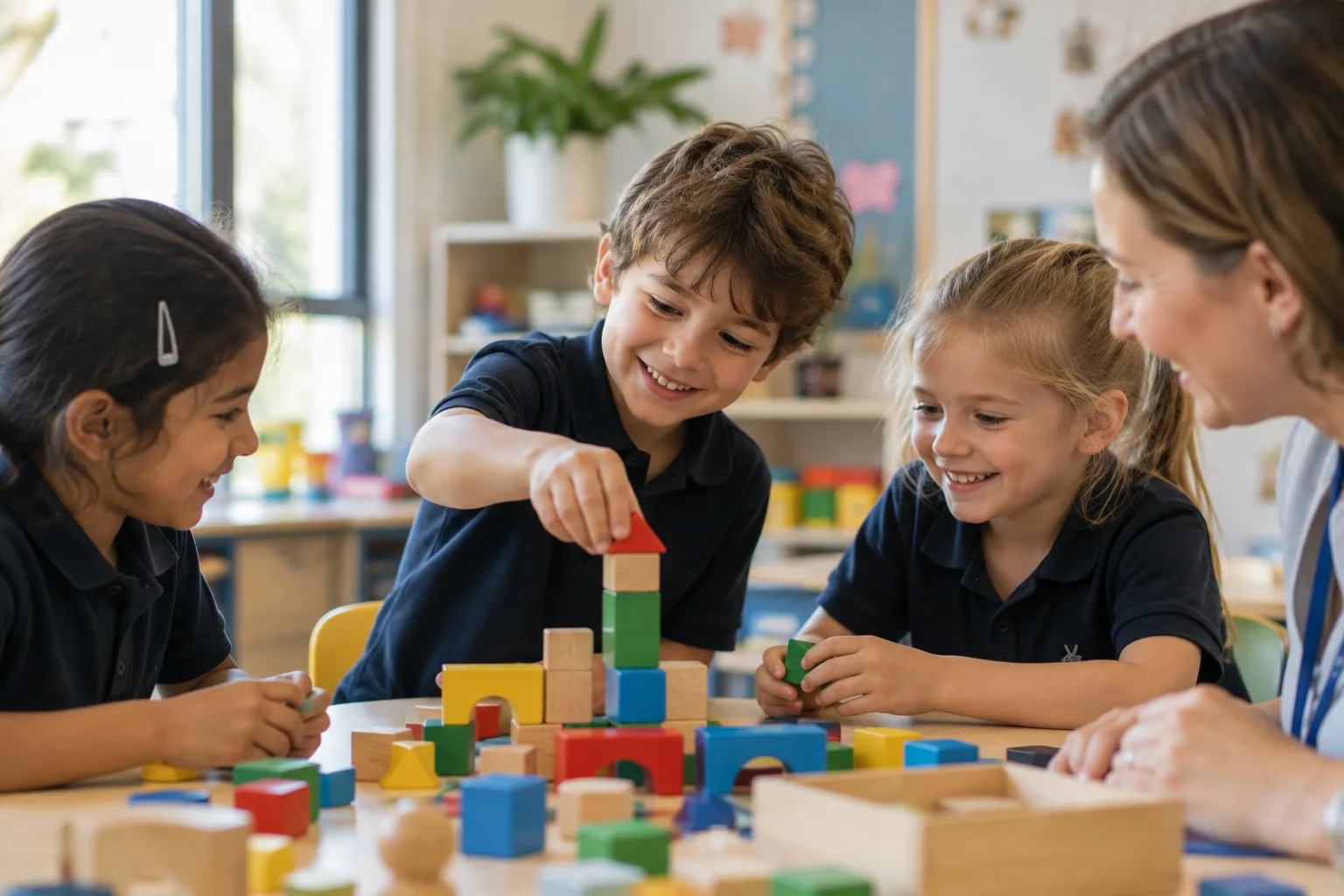
Walk into a school where behaviour has genuinely turned a corner and you’ll notice something before you see a single sticker chart or detention list: the children look like they want to be there. That isn’t an accident, and it isn’t soft. It’s the product of deliberate work on belonging, and it’s the part most behaviour policies skip straight past.
The order matters
Most systems are built back-to-front. They start with the rules, attach consequences, and hope connection follows. But a decade of classroom research points the other way: students regulate their behaviour for adults they trust, in rooms where they feel known.
A child who feels they belong will work with you. A child who doesn’t will work around you. The rulebook is the same. The outcome isn’t.
There’s a reason for the sequence. A child who feels unsafe or unseen is running a low-level threat response, and a brain in threat mode doesn’t do its best thinking. It defends. No sanction reaches a child who has already decided you’re against them. Connection isn’t the reward for good behaviour; it’s the precondition for it. Get the relationship right and a surprising amount of what we call “behaviour management” simply stops being necessary.
Three things that move the needle
When we look at the schools getting the best results on Ten Points, the same habits show up again and again.
Catch the quiet ones
Recognition shouldn’t only flow to the loudest wins. The child who simply turned up and tried deserves a point too. The children who most need to feel they belong are often the easiest to overlook: not disrupting, not dazzling, just quietly deciding whether this is a place for them. Deliberately spreading recognition to the middle and the margins is how belonging reaches the students who would otherwise slip through it.
Name the value, not just the act
“Thank you for showing care” lands differently from “good job”. It tells a child who they are becoming, not just what they did. Praise aimed at character – kindness, persistence, honesty – hands a child an identity to live up to; “good job” has evaporated by lunchtime. Name the value and you give them a story about themselves that’s worth protecting.
Make it visible
When recognition is seen by the whole community, belonging stops being a private feeling and becomes a shared culture. A point announced, displayed, or mentioned to a parent does double duty: it lands with the child and it tells everyone else what this place values. Over time that’s how a class builds a sense of who we are. And a child who belongs to a “we” behaves very differently from one who feels alone in a crowd.
What belonging isn’t
This is where the idea gets misread, so it’s worth being blunt. Belonging-first is not lowering your standards, and it’s not the absence of boundaries. Quite the reverse: children are most able to belong in rooms with clear, consistently held expectations, where they feel safest. Warmth without structure is just chaos with a smile.
The shift isn’t fewer boundaries; it’s the order you lead with. You build the relationship first, so that when you do hold a line – and you will – it reads as I expect this of you because I believe in you, not I’m against you. High expectations and high belonging aren’t a trade-off. Done well, they’re the same move.
Where to start on Monday
You don’t need a new policy. Pick one class, one week, and one shift: award for effort and kindness before you correct anything. Notice the quiet children by name. Then watch what happens to the room.
Belonging first. Behaviour follows.