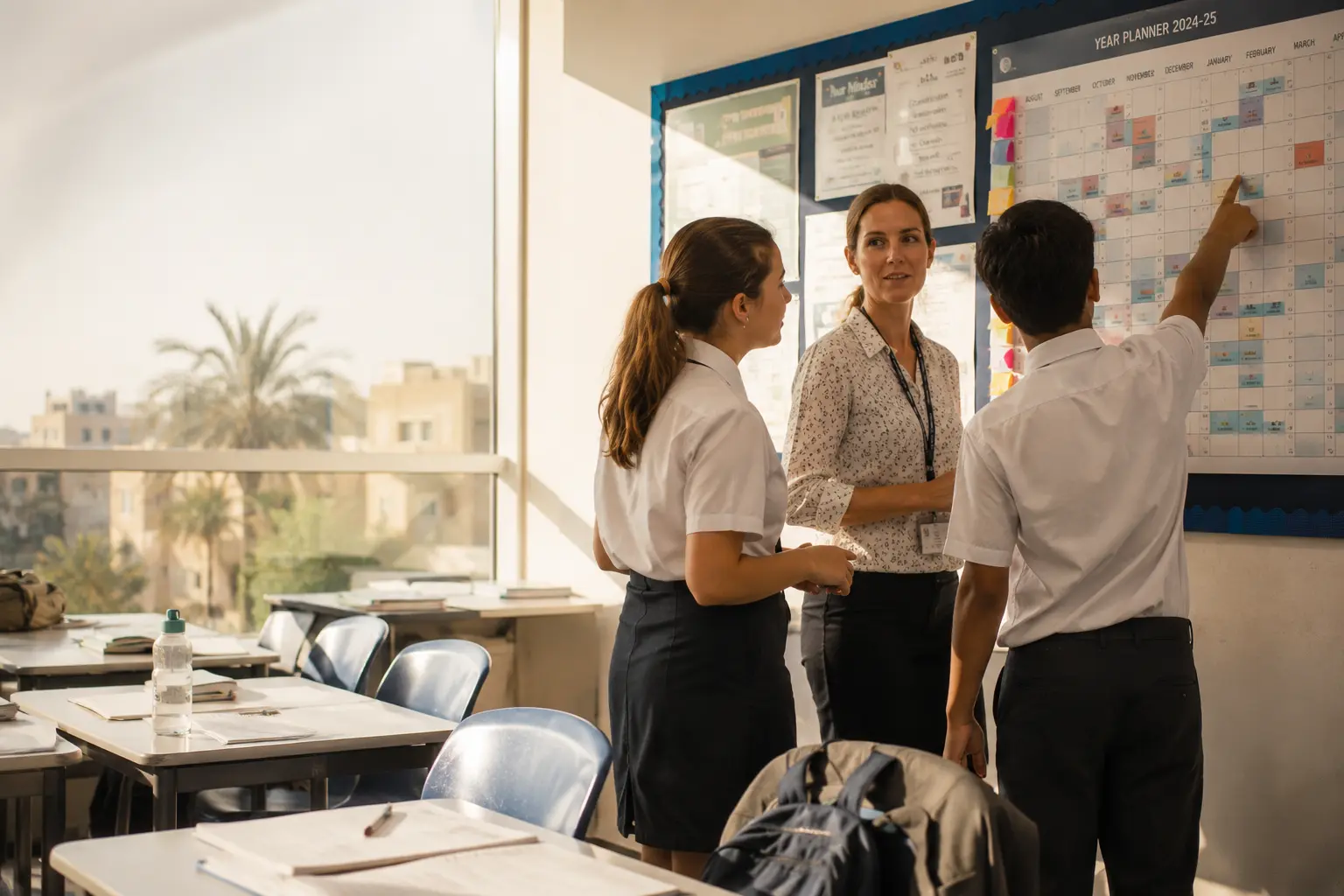
The Ministry of Education has published the unified calendar for 2026–27, and most of what has been written about it is a list of dates for people booking flights. That list matters. But a school does not live a year as a list – it lives it as a rhythm, and the rhythm is the part no calendar prints.
The shape of the year
Three terms of 67, 60 and 58 school days. One hundred and eighty-five in total.
Term 1 is the long one, and it is longer than it looks: thirteen teaching weeks broken only once, by the October half term. Term 2 comes back from three weeks away and runs into Ramadan. Term 3 is the short sprint – twelve weeks, most of it assessed.
About a third of it is a forecast
This is the thing worth knowing, and the thing most calendars get wrong by omission.
Ramadan, Eid Al Fitr and Eid Al Adha all depend on a moon sighting. They are printed everywhere in the same black text as the fixed dates, as though 9 March 2027 were as settled as 4 January. It is not. Eid Al Fitr is expected to fall across 8–12 March, and that block can move by a day or two when the sighting is announced.
For a family booking flights, that is a footnote. For a Head of Year holding deposits on a residential, it is the whole decision. So the planner below marks every date as either confirmed or expected, rather than letting the two sit side by side looking identical.
It also splits by emirate and by curriculum, because the differences are real: Sharjah takes its spring break a few days earlier and finishes the year a day ahead of everyone else, and the October half term is the single most variable week in the country.
See more details at Termtime.ae.