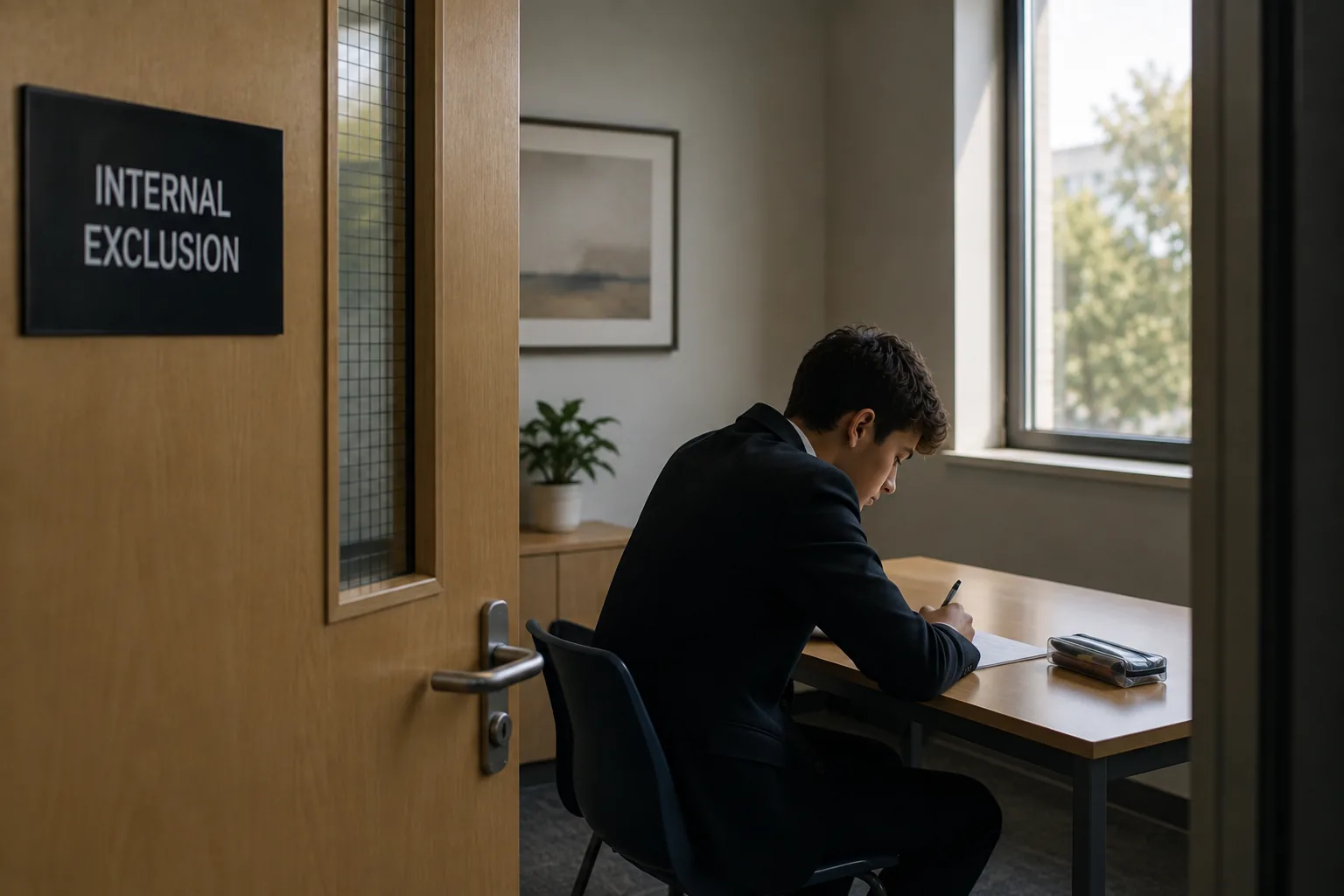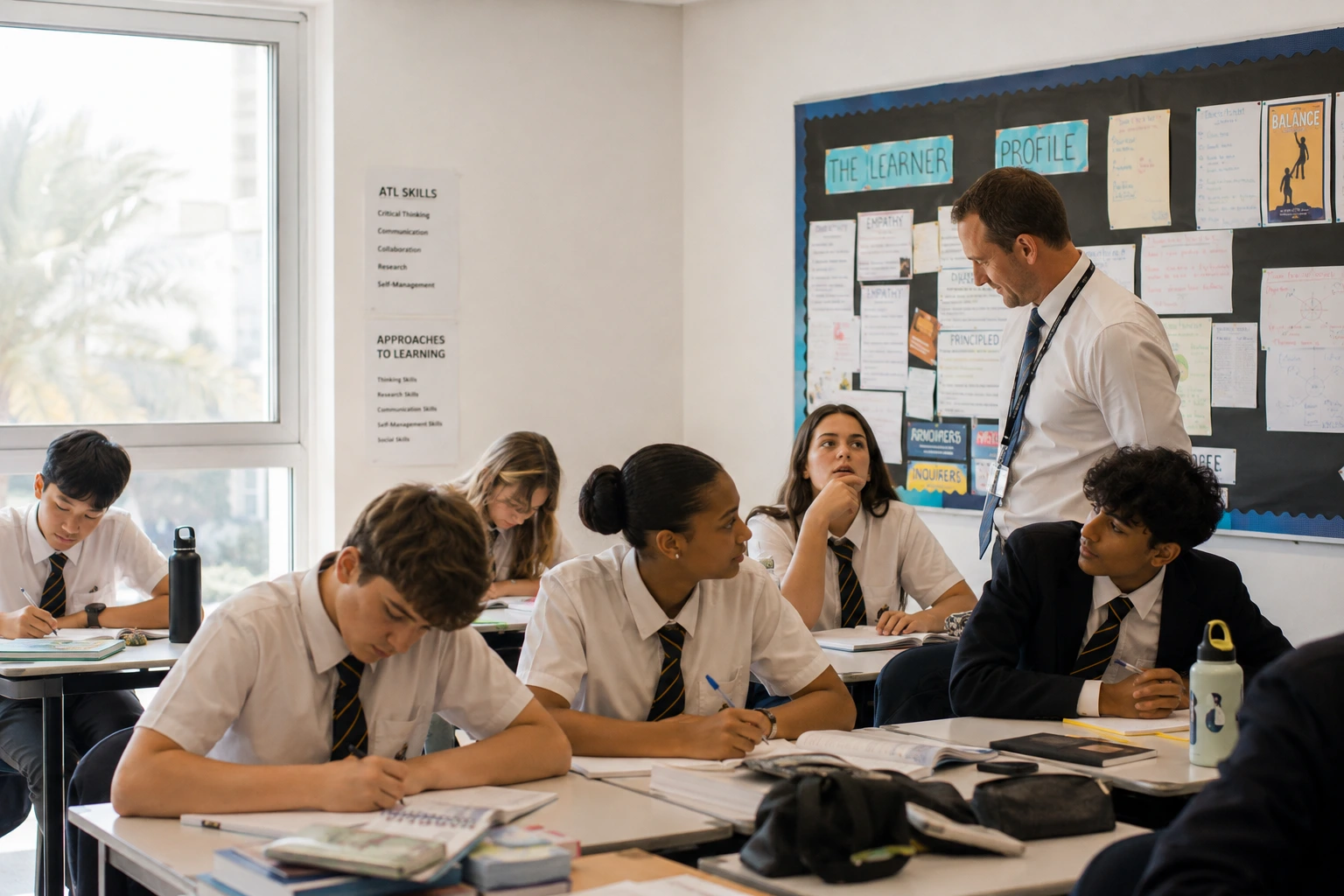
KHDA inspections are changing for Dubai private schools from the 2026–27 academic year. Schools will receive no more than 24 hours’ notice, and KHDA is introducing two types of quality assurance visit: full inspections and shorter monitoring visits.[1]
Somewhere in Dubai next academic year, a principal’s phone will ring at four in the afternoon. Inspectors tomorrow. There will be an evening of messages, a slightly quieter staffroom, and a morning that has to be exactly like every other morning – because there is no longer time for it to be anything else.
The practical consequence is that inspection readiness stops being something a school can do in the fortnight before a visit. One day is not enough time to build a folder or rehearse a culture, which is precisely the intention: the shorter notice is meant to show what teaching, learning, wellbeing and school culture look like on an ordinary day rather than on a prepared one.
Everything below is what that actually means for a Dubai school leader – what has changed, why, what it changes operationally, and what is worth doing before September.
KHDA inspection changes for 2026–27 at a glance
| Change | What it means |
|---|---|
| Maximum 24 hours’ notice | Little room is left for inspection-specific preparation |
| Two types of visit | Schools may receive either a full inspection or a shorter monitoring visit |
| Full inspections | Specialist inspection team, published report and updated overall rating |
| Monitoring visits | Smaller team, targeted audit trails, concise report and no new overall rating |
| Data-driven selection | KHDA uses school data, profiles, self-evaluation, submissions and attainment information |
| Third-year schools | Schools completing their third year of operation receive a full inspection |
| Starts 2026–27 | The new quality assurance approach begins in the 2026–27 academic year |
What are the KHDA inspection changes for 2026–27?
Following the pause in routine full inspections, KHDA quality assurance visits will resume across eligible Dubai private schools in 2026–27 under a new model. The pause was never a complete stop – schools continued to submit self-evaluations and external benchmark assessments throughout, and schools reaching their third year of operation were still inspected.[2] What returns next year is the full cycle, in a different shape.
Four things are worth having straight before term planning starts.
Notice is down to 24 hours. KHDA’s stated reason is that a visit arriving with minimal warning shows what a school is actually like on a normal day – its teaching, its learning, its wellbeing provision, its ordinary operations. Not the version of your school that three weeks of preparation can produce.
There are now two kinds of visit. A full quality assurance visit, carried out by specialist teams applying the UAE School Inspection Framework, produces a published report and an updated overall rating. A shorter monitoring visit, led by a smaller team, follows specific audit trails and produces a concise report with strengths and recommendations, but no new rating.[1]
Which one you get is decided by data, not by rota. KHDA has described a moderated, data-driven methodology drawing on existing data, school profiles, self-evaluations, submissions and student attainment. Schools completing their third year of operation receive a full inspection. For everyone else, the file speaks before the inspector does.
It sits inside a bigger strategy. The change is framed against Education 33, Dubai’s ten-year education strategy launched in October 2024, whose second goal is providing accessible and equitable education focused on the wellbeing of diverse learners.[3] Fatma Belrehif, CEO of the Education Quality Assurance and Compliance Agency, put the logic plainly: the differentiated approach “recognises that schools are at different stages of their improvement journey.”
Read together, the message is not that inspection has become harsher. It is that inspection has become harder to prepare for, and easier to be ready for. Those are different things.
Why has KHDA moved to 24-hour inspection notice?
Every school leader in Dubai knows the sprint. The corridor displays that go up in a fortnight. The learning walks that suddenly become weekly. The folder – there is always a folder – assembled by someone who should have been doing something else. The teacher who spends a Sunday rebuilding a scheme of work that was fine.
None of it was dishonest. It was rational. When you knew roughly when someone was coming, preparing was the sensible response, and the sector organised itself around it.
Twenty-four hours removes the reward for that behaviour entirely. You cannot build a folder overnight. You cannot rehearse a Year 6 class into a culture of respect between the phone call and first period. What an inspector sees is what has been happening since September.
For most leaders, the honest reaction will be relief mixed with something less comfortable. Relief, because the sprint was exhausting and everybody knew it distorted the picture. Less comfortable, because the question changes from can we show this to is this true on a Wednesday in February.
What does the new KHDA inspection model mean for Dubai schools?
Operationally, three things move.
The calendar stops being a planning tool. There is no longer a window to prepare into, so anything that was scheduled around an expected visit – the audit, the book-look, the policy refresh – has to become part of the ordinary year or stop being evidence at all.
Your data becomes your first impression. Because the choice between a full inspection and a monitoring visit is made from school profiles, self-evaluation and attainment, the file arrives before the team does. That makes routine leadership analytics a live concern rather than a reporting exercise.
Consistency becomes visible. A visiting team on a normal day sees the gap between how two departments read the same behaviour policy far more clearly than a prepared one would. Consistency was always the hard part; now it is also the observable part.
What schools cannot prepare in 24 hours
Some things survive short notice easily. Safeguarding certification, health and safety records, governance minutes – these are either current or they are not, and no amount of notice would change that. Sort them, keep them dated, and stop thinking about them.
The harder category is everything to do with culture. The UAE School Inspection Framework has always given real weight to students’ personal and social development, and that is precisely the domain that a three-week run-up used to flatter.[4] How children speak to each other in a corridor. Whether behaviour expectations mean the same thing in the maths block and the art room. Whether the quiet child in Year 8 has been noticed by anyone since October.
These are not documents. They are the accumulated residue of a thousand small decisions, and they take a year to shift rather than a term.
Which is why the practical question for leaders is no longer how to prepare. It is how to make the ordinary week produce its own evidence.
How should Dubai schools prepare for KHDA inspections in 2026–27?
The short answer is that preparation moves upstream. Instead of a project that runs in the fortnight before a visit, inspection readiness becomes a property of how the school already records recognition, behaviour, wellbeing and pastoral follow-up during a normal week.
That reframing is worth making explicit with your leadership team before September, because it changes what you ask for. The question stops being can we produce this if asked and becomes does this exist already, without anyone being asked. Schools that have built a continuous evidence base for inspection find the second question much easier to answer.
Five things schools should do before September
Make evidence a by-product, not a project. If gathering evidence of your school’s culture requires a project, you will always be a fortnight behind a 24-hour phone call. The alternative is that recognition, incidents, wellbeing checks and pastoral notes are captured in the flow of the day, by the people who were there, in seconds. Then the record exists because the work happened, not because a visit was announced.
Audit your consistency before someone else does. Ask three teachers in three different departments what your school’s values look like in their room. If you get three different answers, that gap will be visible to a visiting team in a morning, and it is one of the most common things schools are told to improve.
Know your quiet children now. Incident logs record the difficult days. They say nothing about the child who has simply stopped being noticed. If you cannot currently answer the question “who has received no recognition this term?”, that is worth solving on its own merits, and it happens to be exactly the kind of thing that distinguishes a strong pastoral picture from a stated one. Regular wellbeing journals and student voice surveys are two ways schools close that gap without adding a meeting.
Rehearse the answer to “how do you know?” Inspection conversations tend to ask leaders and middle leaders to articulate improvement priorities and to talk to their own data. The strongest answers are specific and slightly unflattering: this is what we found, this is what we changed, this is what has not moved yet. The weakest are the ones that describe a policy rather than its effect.
Take your self-evaluation seriously, because it now routes you. When the selection between a full visit and a monitoring visit is made from data and self-evaluation, an over-generous self-assessment is no longer a harmless act of optimism. Write the one you would defend on a Tuesday.
The part that is genuinely good news
It is easy to read all of this as pressure, and there will be a term of nervousness while the sector adjusts. But consider what short notice actually rewards.
It rewards the school where the behaviour policy is understood the same way by the newly qualified teacher and the head of year. It rewards the school that noticed the child in September rather than assembling the intervention record in March. It rewards, quite specifically, the schools that have been doing the unglamorous work all along and never got much credit for it, because the visiting team arrived to find every school looking its best.
Dubai has, in effect, decided to inspect the average day. For a lot of schools, the average day is better than the performance ever was.
Where to start
If you are working out what this means for your school, the useful first step is small. Pick a normal week in September, and ask what evidence of your culture that week would leave behind on its own. Not what you could assemble. What would simply be there.
If the answer is thinner than you would like, that is the conversation worth having – and it is the one Ten Points was built for. Book a call and we will show you what an ordinary week looks like when it records itself.